




 Faculty


Conducted by NIFT/ NID/ MITID, SRISHTI, SYMBIOSIS, NIIFT, MOHALI Etc.
First of all, we at DREAMZ INSTITUTE wish all of you good luck and grand success in the examination(s) of NIFT/ NID/ PEARL/ NIIFT Mohali etc. whichever is your DREAM institution for pursuing fashion/ design/ fashion management/ fashion technology courses. And we hope, with a right mix of hard work and smart work that includes choosing the right place to prepare excellently will enable you to finally come out with flying colors.
SITUATION TEST:
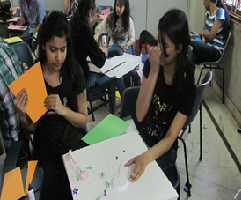
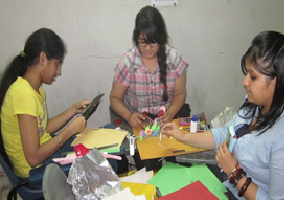
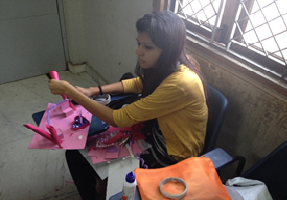
Those students who qualify in the NIFT’s written test will be called for another test that is called situation test which is a hands-on test to evaluate the candidate’s skills for material handling and innovative ability on a given situation with a given set of materials
Situation test plays a very important role in final selection or rejection in NIFT Design programmes as 20% weightage in overall selection procedure goes to this. The preparation for situation tests requires a fair duration of time with classes and self practice based on those classes. It’s a gradual process and it is difficult to do that in few days. So it is advisable to start early to know the tricks of it well and to do lots of practice for situation test.
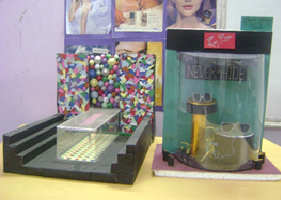
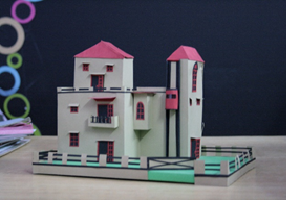
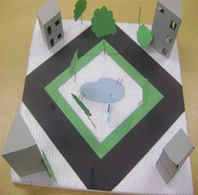
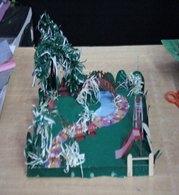
Situation Test comprises of 3-D model making using all the materials provided to them. The materials may include thermocol, different kind of papers, wire, string, ice-cream sticks, toothpicks, matchsticks etc. Students have to create one or two 3-D model within the time limit of 2 hrs to 3 hrs (approx). Each model must be accompanied by a caption and a write up of around 100 words.
Students who devote first few minutes in visualizing and drawing a rough sketch of their ideas and do a proper planning of what is to be done first and what at last are on advantageous side. You must carry some stationeries like- paper cutter, sharpened pencils, pair of scissors, compass, fevicol, quick-fix, blue/black ball point pen, sand paper etc.
NIFT- SITUATION TEST SAMPLE QUESTIONS (NID/ MITID/ SRISHTI, SID, NIIFT Etc.)
1. Design a stage for a Ramp Show
Materials provided: Thermocol (A-3 size), Mount Board (A-3 size), Pastel sheet, silver/ golden paper sheets, Copper wire, and Transparency sheets (A-4 size).
2. Design a bedside lamp
Materials provided: Thermocol (A-4 size), Mount Board (A-4 size), Pastel sheet- 3 (A-4 size), Silver/ Golden paper, Straws-3, Copper wire. Students are judged on the basis of their- innovativeness, clever and creative handling of given materials, an appropriate theme and writing skills.
NOTE: JOINING EARLY WILL BE VERY BENEFICIAL AND THIS SITUATION TEST PREPARATION WILL BE RELEVANT FOR OTHER EXAMS ALSO LIKE NIIFT, SYMBIOSIS, SRISHTI etc.
STUDIO TEST
After the declaration of the results of Design Aptitude Test (DAT), NID conducts around 2 days workshop that comprises a series of tests usually at its campus. This is known as Studio Test.
1. Three dimensional model making exercise (30 minutes to 45 minutes approximately) using the given materials like a piece of cloth, clay, wire, string, different kinds of paper, thermocol etc.
2. Thematic/psychometric test (few minutes) - - This is based primarily on students’ presence of mind and observation
3. Audio/visual test- - Students have to listen to an audio or may be shown a video clipping for a minute and then he/she is to answer some questions based on them.
4. Portfolio Review- It is very important aspect of the NID’s final selection procedure. Students should carry a portfolio comprising their own artistic work which may include drawing and sketching, photographs, computer layouts etc. Students should not refer others’ work as their own as the experienced examiners easily make it out and it goes against students who try to do this.
5. Personal Interview- A candidate is judged on the various parameters like: Career orientation/ Aptness for the field/ overall personality traits, Personal achievements in academics and co- curricular activities, Communication skills, General awareness and aptitude.